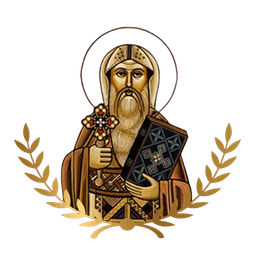
St. Peter Seal of the Martyrs
17th Pope of Alexandria — Martyr · 29 Hathor
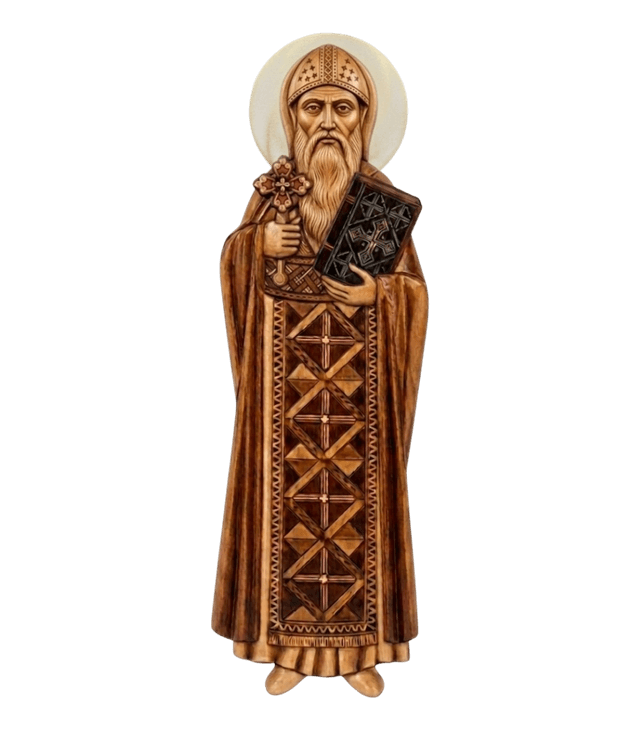
Patron of Our Parish
The Seal of the Age of Martyrs
St. Peter Seal of the Martyrs is the 17th Pope of Alexandria, martyred on November 26, 311 AD — just two years before the Edict of Milan ended Roman persecution. He bears the title "Seal of the Martyrs" because he was the last of the great martyrs of the Roman age of persecution. Our parish carries his name as a living inheritance of faithfulness unto death.
His Life
Milestones of a Holy Life
Birth & Early Life
Peter was born in Alexandria to Theodosius, an archpriest, and his wife Sophia. Before his birth, his mother received a vision in which the holy Apostles Peter and Paul foretold the coming of a child who would serve God greatly. At the age of seven he was placed under the care of Pope Theonas of Alexandria, who recognized the gifts God had placed in him.
Scholar & Catechist
Under Pope Theonas, Peter rose through every degree of the clergy and became the head of the renowned Catechetical School of Alexandria — the greatest center of Christian learning in the ancient world. He was known for his deep theological knowledge, his eloquence, and his holiness of life.
17th Pope of Alexandria
Upon the repose of Pope Theonas around 300 AD, Peter was chosen as the 17th Pope of Alexandria and Patriarch of the See of St. Mark. He inherited the throne at one of the most turbulent moments in the history of the Church, on the eve of the Great Persecution.
Shepherd in Persecution
When Emperor Diocletian unleashed the Great Persecution in 303 AD — the most savage in Church history — Pope Peter stood as a true shepherd. Though he himself was forced into hiding to continue governing the Church, he visited imprisoned Christians, strengthened the faithful for martyrdom, and wrote pastoral letters that still survive, guiding his flock through suffering and calling them to steadfastness.
The Meletian Schism
During the persecution, Meletius, Bishop of Lycopolis, overstepped his authority and began ordaining clergy in other dioceses without canonical permission, sowing division in the Egyptian Church. Pope Peter confronted this disorder firmly, eventually excommunicating Meletius and working to restore unity and order to the flock entrusted to him.
The Vision & Arius
Pope Peter was the first to discern and condemn the heresy of Arius, a deacon of Alexandria who would later shake the entire Church with his denial of the full divinity of Christ. It is recorded that Pope Peter received a vision of a young child — the Lord Jesus — whose robe was torn, and was told: "Arius has torn it from Me." He excommunicated Arius and warned the Church against his teaching, planting the seed of what would become the Council of Nicaea.
Martyrdom — November 26, 311 AD
Under Emperor Maximinus Daia, Pope Peter was arrested in Alexandria. A great multitude of the faithful gathered at the prison, ready to fight for his release. Knowing that a riot would bring destruction upon his people, Pope Peter secretly arranged with his jailers to be led out through a different gate and beheaded quietly — giving his life so that his flock would be spared. His final prayer, offered at the place of his execution near the tomb of St. Mark at Bucolia, was: "I give thanks to Thee, O Lord my God, that Thou hast made me worthy to complete this course." A voice from heaven is said to have answered him.
His Title of Glory
Why "Seal of the Martyrs"?
Throughout the Roman age of persecution, the blood of hundreds of thousands of Egyptian Christians was shed in witness to Christ. When Pope Peter was martyred in 311 AD, he closed that entire chapter of Church history — earning the title "Seal of the Martyrs" as recognition of his unique place as the last of the great martyrs before persecution's end. A white dove is said to have descended upon him during his final prayer, a sign of God's grace and favor.
☩
"Let my blood mark the end of the persecution."
— St. Peter Seal of the Martyrs